For the past few years, organizations, including c-store retailers have been experimenting with artificial intelligence (AI). Last year, retailers shifted the conversation from if they should implement AI to how they could implement.
Research and advisory firm, Gartner, pointed out that in 2027 the conversation around AI is expected to shift again from adoption to governance. In other words, the focus will move from simply adopting and implementing AI to making sure it is used responsibly and safely. The goal going forward is to ensure AI delivers value without creating unnecessary risks for retailers or consumers.
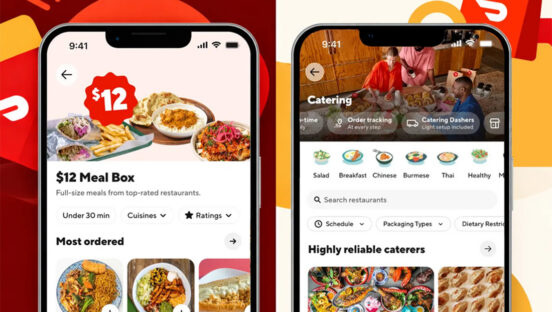
AI is also influencing how customers shop. Agentic AI, and specifically a growing area called Agentic Commerce, is expected to expand in 2027. This is AI that essentially acts like a personal shopping assistant, answering questions, helping customers shop and potentially purchasing items for them. And while c-stores have traditionally relied on forecourt traffic, now delivery apps and AI-powered shopping assistants are changing how customers discover and purchase products.
A recent report by tech company Lightspeed Commerce found that 40% of U.S. shoppers have used AI tools like ChatGPT or retailer-integrated shopping assistants during holiday or major sale shopping. This was even more pronounced among 25- to-34-year-olds (66%) compared to those aged 65 and over (17%). Some 41% of Americans believe customers using AI will gain better deals.
The technology is also influencing purchasing intentions. Some 30% of shoppers said an AI recommendation has convinced them to purchase something they had not originally planned to buy. And once, again, age played a role, with 57% of 25- to 34-year-olds making an unplanned purchase based on an AI recommendation compared to only 10% of those 65 and older.
Integrating AI
On CStore Decisions’ CStore Talks podcast, I’ve been busy asking c-store retailers about how they are thinking about and approaching AI, and where they think it’s going in the future.
Babir Sultan, CEO of FavTrip, with three stores in Missouri, has been an early adopter of AI at his c-store chain. Earlier this year, he set up four AI agents to handle different tasks, and the billing agent caught a $25,000 billing error in real-time. When he looks ahead to what’s next for FavTrip and AI, “the sky is the limit,” he said.
One thing he’s experimenting with is how AI can help with pricing strategy, he told me.
“The AI knows the delivery process, but it also knows the cost now too, right?” Now, he’s taking it one step further to asking “what should I retail this for?”
“I want to know within my zip code what is something going for because that’s more unique to me,” he noted.
Sultan is methodical about how he goes about determining where to launch AI next.
“I always say, let’s take one step at a time and get closer and be efficient. So what is exciting for us is that we’re taking the mundane boring stuff now and trying to be better and efficient and free up our staff’s time,” he explained.
And, in 2027, he might even begin to implement physical AI to tackle some of those mundane tasks — that’s right, robots.
“I’m talking to a few folks right now. … We are in the early stages of doing things like a big cart (or autonomous mobile robot) being moved by an AI cooler, going in the cooler … and then learning (inventory management). … And then the AI will stock it for us,” he said.
If effective, the move would further free up team member time.
“You’re going to see a lot of thinking behind, ‘how do we take this in the physical world now.’ So we want to a create skill set where the actual physical work is being done,” he said.
He sees potential for AI to take on tasks like taking out the trash or cleaning the floors at FavTrip. Already, the team uses AI to alert them if the floor is wet and the wet floor sign has not been put out. “Our AI cameras are going to tell us that,” he said. “It’s a big deal because we get a lot of lawsuits. Most are made up and false, and it’s lucky we always have that in place. It has reduced our six or seven lawsuits a year to maybe zero to one now. … I’m excited for the physical side of AI when we’re going to have actual physical cases of AI being used.”
Dana Moloney, CEO of Warrenton Oil, which operates 58 FastLane convenience stores also shared some thoughts on AI in a recent CStoreTalks podcast.
“…I think AI will affect the backend of our industry before customers fully recognize how much it’s affecting the front end,” Moloney said. “There are enormous amounts of data in convenience business from transactions, pricing, inventory, loyalty, labor, weather, promotions, fuel volumes. We’ve always had more data than we have the ability to really use or analyze or do anything with. So hopefully AI can help us all identify patterns and make decisions faster.”
Moloney said she envisions AI applications in inventory management and scheduling, administrative work. “That’s where we’re starting,” She said. “It can also give our managers back time. So we’re trying to reduce the amount of time our store managers are spending on paperwork or digging through reports or watching hours of video, so they can spend more time with our customers and their people.”
While physical AI might be coming, both Sultan and Moloney stressed that the focus should be on reallocating labor to more important tasks rather than eliminating jobs.
“I don’t believe the goal should be to automate the humanity out of convenience retail because we’re still a people business,” Moloney said. “It should just help make us better at serving our customers, and so that’s what we’re trying to focus on.”
CStoreTalks is a monthly podcast that features deep-dive interviews with convenience store executives to learn about how they’re approaching technology, foodservice integration, store modernization and much more.
Listen to the full conversation with Dana Moloney, CEO, Warrenton Oil HERE.
Listen to the full conversation with Babir Sultan, CEO, FavTrip HERE.