As category managers across the convenience retail industry prepare for 2027, those who manage tobacco must navigate the total nicotine consumer, which means more now than it did in years past.
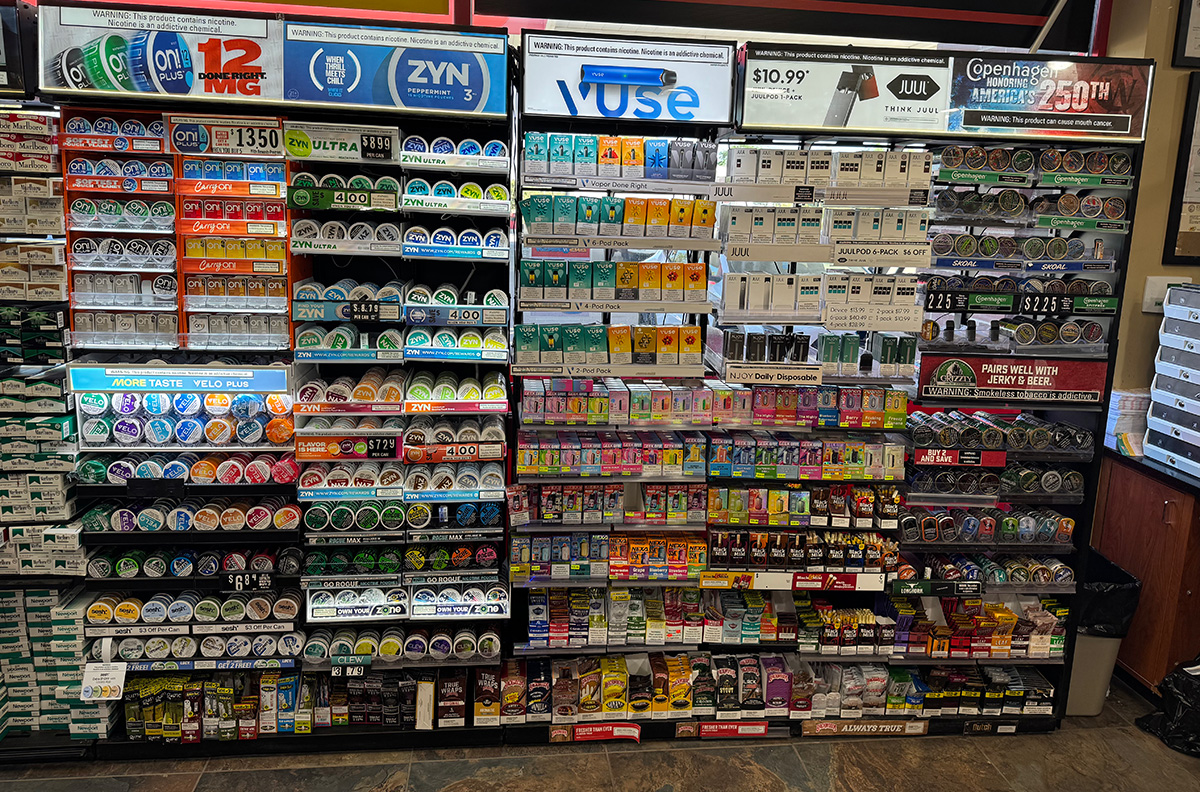
Product innovation is more rampant than ever in the category, and retailers need to balance it with backbar space and regulations. Consumer trends are changing, and more tobacco users are willing to cross segments as variety increases.
“I think the biggest issue is the speed of change, both with the consumer and with regulation,” said Victoria Sheppard, category manager for Love’s Travel Stops, which operates 670 stores in 42 states. “Consumers are moving across nicotine categories much faster than they did a few years ago, especially into modern oral and other emerging products, while retailers are also dealing with very different regulations from the federal, state and county levels.”
Shifting the Mix
Just a few years ago, the tobacco category was steadier and more predictable. Now, with nicotine pouches and other innovation changing the conversation, retailers need to make a case for every product on the backbar.
The amount of space a segment receives needs to match its sales, units, margin and future growth potential, Sheppard said.
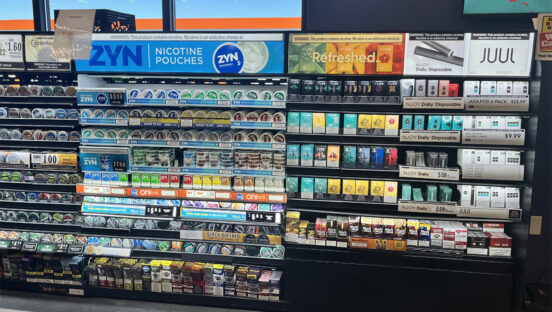
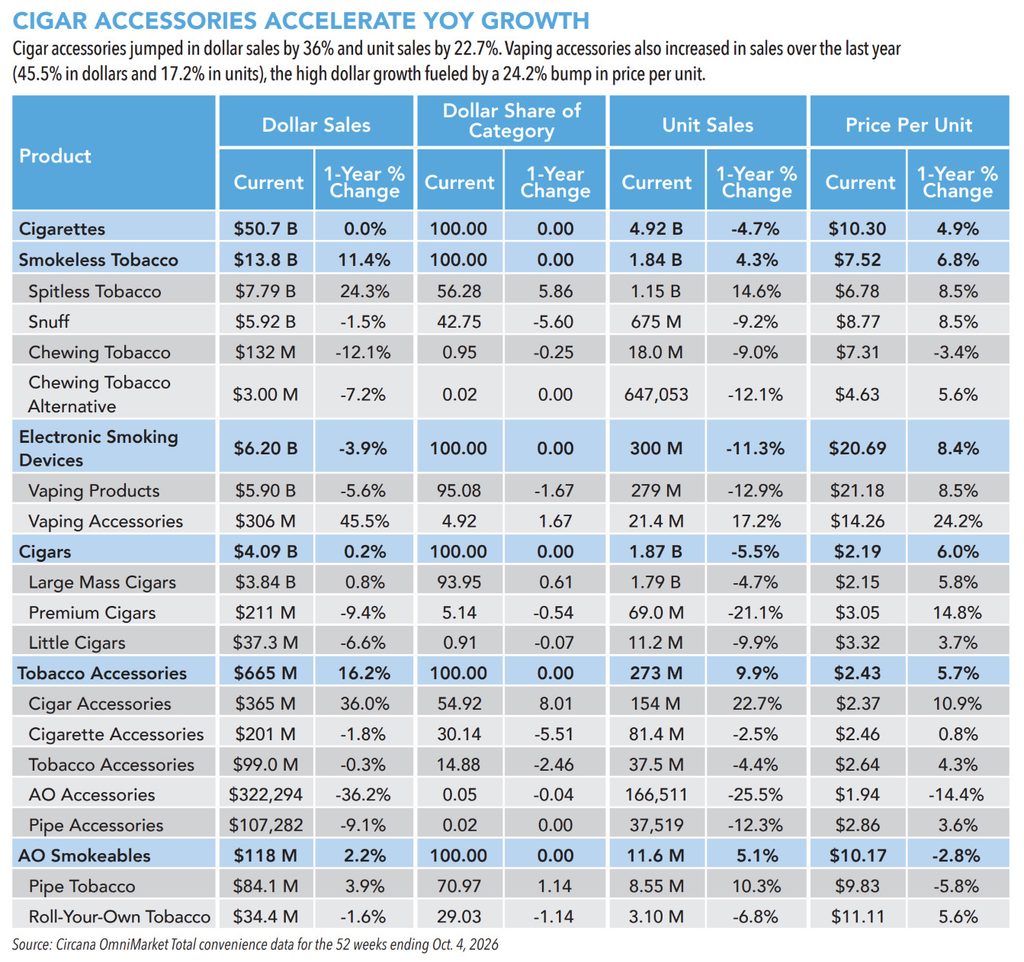
To that end, many c-store retailers have already added space for nicotine pouches, as sales skyrocketed in the segment during the last few years. According to market research firm Circana, spitless tobacco rose 24.3% in sales for the 52 weeks ending Oct. 4, taking the majority of smokeless dollar share. Vape, too, presents opportunity with the right assortment and regulatory clarity. Often, this coincided with reducing cigarette space.
“That said, I wouldn’t define the opportunity as simply replacing cigarettes with something else. Cigarettes are still an incredibly important part of the convenience business. The strategy is to protect that core business while being willing to move space, inventory, and investment toward the segments where the consumer is moving,” Sheppard said.
Anna Bettencourt, director of category management and merchandising for Yatco Energy, which operates 20 stores in Massachusetts, Rhode Island and Connecticut, agrees that nicotine pouches present the strongest growth opportunity in tobacco, as well as vape depending on regulations. However, she noted that nicotine pouches are now growing at a slower rate than previously.
“I am also very interested in ‘heat not burn’ technology. So many variables with pending applications and economic pressures for consumers,” she added.
Generally, Bettencourt believes innovation is more important than ever before. Successful tobacco strategy next year means adjusting for future trends and sales and correctly sizing the tobacco space. Yatco has invested in new fixtures and changed the space within the tobacco segments in preparation. The chain can pivot quickly when needed, particularly in Massachusetts with its localized regulations.
As new tobacco innovation hits the market, however, Sheppard cautioned against adding every new item to the backbar. Assortment discipline is important, and as more consumer choice in pouches arrives in 2027, tobacco category managers must be savvy in stocking the products that are truly incremental and productive enough to earn permanent backbar space.
“There is also an opportunity beyond the individual product sale. Tobacco and nicotine customers create valuable trips and baskets. Loyalty, targeted promotions and stronger vendor partnerships can help us grow the total customer relationship instead of focusing only on one transaction,” she said.
Regulation by Market
Increased innovation ups retailers’ regulatory watch.
In fact, regulation is one of the biggest challenges for all retailers in the tobacco space, according to Bettencourt. At Yatco, this makes sense, as most stores are located in Massachusetts, which has a statewide flavor ban and differing regulations in multiple towns.
“It is definitely not apples to apples in the state,” she said.
The speed at which products are reviewed and marketing granted orders declared by the Food and Drug Administration are also obstacles to innovation.
“The challenge for retailers is that we can’t manage the category in silos,” Sheppard added.
Tobacco retailers need to understand where the consumer is moving while staying ahead of taxes, directories, flavor restrictions, licensing requirements and other legislation.
“Going into 2027, being informed early and being able to react quickly is going to be just as important as having the right assortment,” she noted.
Both retailers agree that staying abreast of state and local legislation is necessary. Marketing authorization cannot only be viewed on a federal level; requirements often need to be addressed “market by market and sometimes product by product,” Sheppard said.
Vape registries, she added, even the playing field for all retailers in a specific market, even if they can be cumbersome. Bettencourt noted registries can work if they’re statewide, but she often sees disparate state and town regulations.
“I just want to see consistency,” she said.
Different local legislation can make balancing compliance requirements with the need to keep tobacco operations efficient at the store level difficult.
Bettencourt meets with business partners, attends as many shows and forums as possible and follows regulations to be aware of possible changes.
“I attend and speak at several town hearings in Massachusetts every year. Know what is happening in your markets so you can partner with your partners. Tobacco is still a key traffic driver, and we need to do everything we can to meet our customers’ needs and wants. Although it is challenging times out there, I am always willing to try a new product,” she said.
Staying on top of state regulations can also be challenging for retailers operating in multiple states. For Sheppard at Love’s, state-by-state legislation creates operational complexity. One change can affect assortment, item authorization, planograms, inventory, pricing and store communication quickly.
“The goal is to make compliance part of the process instead of making it another process for the store,” said Sheppard.
With hundreds of locations, a store employee can’t be expected to interpret different laws. Translating requirements into the right item in the right store at the right price with the right authorization and clear communication needs to happen at the corporate level.
“The more complexity we can solve upstream through item setup, planograms, systems, training and communication, the less complexity we push down to the store. Responsible retailing and operational efficiency should support each other, not compete,” Sheppard continued.
Getting involved early is one of the best ways to manage the complexities of the tobacco category. Speak with policymakers and use your voice.
Lead with facts and responsible retailing, Sheppard advised.
“We aren’t advocating against regulation. We are advocating for clear, balanced and enforceable regulation that protects youth while allowing responsible retailers to serve legal-age adult consumers,” she said.
And internally, retailers need to have a clear process for turning regulatory change into store execution. Don’t find out about a change after it becomes effective.
Overall, the message to retailers is clear: be prepared and keep a dynamic backbar. Evolve with the consumer and ahead of regulation.
“There is a lot of uncertainty in tobacco and nicotine, but there is also a tremendous amount of opportunity. I think the retailers that stay informed, remain flexible and continue advocating for responsible retailing will be in the best position to navigate it,” Sheppard said.