
As trends shift, optimizing your merchandising strategy is increasingly important to providing for your customers and remaining shrewd amongst ever-abundant innovation. CStore Decisions reached out to Bryce Proffitt, retail merchandising manager for Tiger Fuel Co.’s The Market, which operates 10 stores in Virginia, for his take on upping your merchandising game.
{CStore Decisions (CSD)} How are you elevating your merchandising strategy?
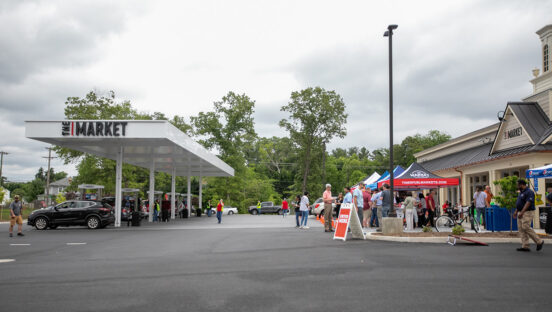
{Bryce Proffitt (BP)} For The Market, the way that we’re trying to focus on it is going store by store, listening to our customers’ insight and each store team’s feedback and perspective. With having 10 stores, we have a really unique opportunity to home in on the customer base at each store a little bit more and offer them what they want rather than having either a national planogram or a regional planogram. Since we are a mid-sized local chain, it gives us an opportunity to elevate through customer perspective.
{CSD} How do you merchandise the store around foodservice operations?
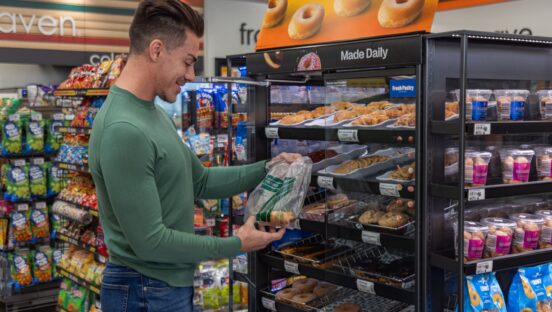
{BP} Foodservice is the focal point of the store. If you’re doing foodservice well, it should be the focal point, and the ideal for us … is to try to work together to where we’re not only making that a focal point, but giving offerings in that section — whether it’s in the cold case or in the hot case or at the hot bar — that might pair well with the menu items we have or with the grab-and-go items that we have.
{CSD} Do local brands play a role in your merchandising strategy?
{BP} Absolutely. We have worked with our incredible marketing department on our Made in Virginia section. We have a lot of brands that are locally made in Virginia. There are four in particular that we’ve partnered with that do really well in our stores. … Marketing has made these little shelf-talkers for the stores to put in our cold case, so we have an entire section in our cold case devoted to these Made in Virginia products. … It gives us an opportunity as the smaller local brand to focus in on those brands, as well. …
{CSD} Where do things break down, and how do you resolve them?
{BP} The biggest breakdown in our merchandising strategy, and I think this is going to be an issue for everyone, is that bottom foot-and-a-half. We have a lot of dead items in there that we try to rotate out. Stagnant end caps. Sometimes you get an end cap that’s had the same thing on it for six months, and customers get bored with it. It’s not exciting anymore. … We do a hard reset once a year in every category, and then we’ll do soft resets throughout the year. And within that, we give our store managers a little bit of room to play with that soft reset. If they see that there’s something that could be moving better if it were up in a better position, they have the freedom and the will to do that. I know with some of the larger chains, it’s a little bit more difficult, because it can get messy doing that. For us, though, we really want to make sure that everything is just getting moved around. Not make it confusing for customers but giving each product its opportunity to shine within the actual set.
{CSD} How do you use data at the shelf level to refine your merchandising?
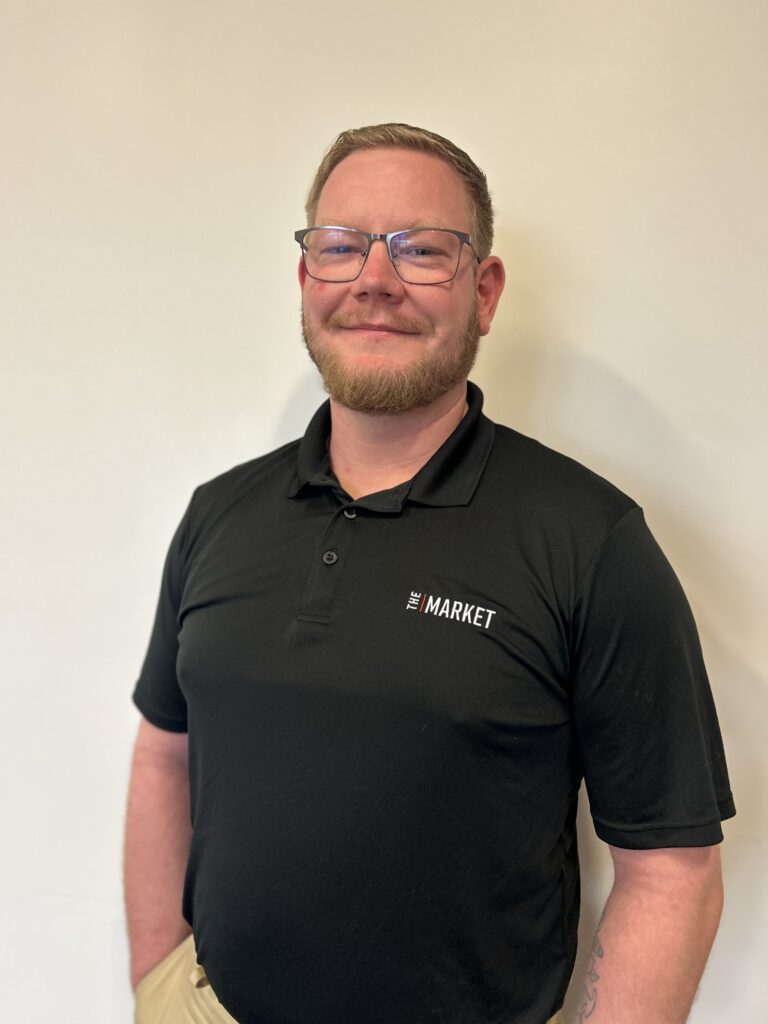
{BP} The big thing for me — (at a) small, mid-sized, local chain — I’m looking at sales data, different trends in the industry, using that to understand what is best for us to have on the shelves, what’s making money and what people are wanting right now but also going into the data that is not quantifiable, that you can’t pull a report on. Getting information from our store managers, from our store associates, from our customers, getting that feedback of, ‘Oh, this would be a cool product to see in there,’ and hearing customers say that multiple times or hearing a couple different customers come in and tell a store associate, ‘Yeah, I’d love to have this beer in here. I’d love to have this soda in here. That would be awesome if I could pick that up,’ and then acting on that. We use the same data that everybody else uses, but we’re also digging into the customers’ (feedback) and into that small, mid-sized, local chain (advantage).