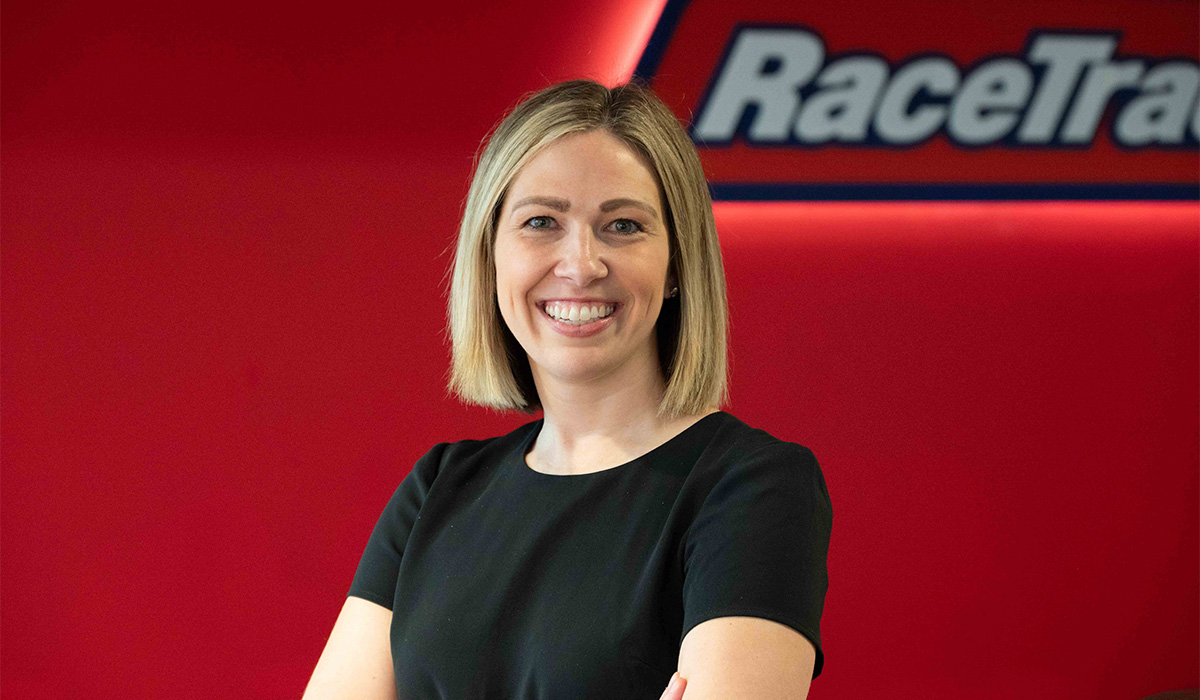
Caroline Grubbs has worked with RaceTrac for over a decade, and in that time, she has established herself as an essential component of the chain’s operational success. From human resources (HR) intern to executive director, people & culture, Grubbs was instrumental in evolving the chain’s HR Business Partner to a more strategic model and rolling out an enterprise-wide Employee Value Proposition.
Grubbs’ level of impact scales across the chain’s 610 RaceTrac, 240 RaceWay and 1,160 Gulf locations.
She oversees learning and development, talent acquisition, employee experience and the HR Business Partner organization, ensuring they operate as one integrated people strategy.
For her dedicated work and accomplishments, Grubbs is recognized with a CStore Decisions HR Award.
Executive Director, People & Culture
When Grubbs first started her career with RaceTrac as an HR intern, she focused on evaluating the talent and performance processes and looking for a system that could automate that work.
“That experience gave me a front-row seat to how the entire HR function operates and the systems that connect it all. It was great hands-on exposure to how people strategy drives business outcomes,” said Grubbs.
When her internship completed, she obtained a full-time role within talent management, and in the 14 years since, she’s been able to intentionally broaden her scope and work across multiple areas of HR as the organization has grown.
“What started as a focus on talent systems has led to my current role (with many stops along the way) as executive director, people & culture, focusing on workforce strategy, organizational design and shaping how HR enables enterprise growth,” she said.
In this role, she wears many hats.
Grubbs is responsible for building a function that delivers quality talent at scale, focusing on how RaceTrac attracts, assesses and hires while strengthening partnership with business leaders. She is also focused on capability building and ensuring the company is equipping leaders and front-line teams with the skills, clarity and performance frameworks they need to execute.
Additionally, her role entails looking at the entire team member lifecycle and ensuring that from onboarding to recognition to listening strategies, RaceTrac’s value proposition is real, measurable and consistently delivered. And, she manages the HR Business Partner, whose functions serve as the connective tissue and translate enterprise strategy into action within the business, advising leaders on organizational design, talent decisions and workforce planning.
“Ultimately, my responsibility is to align talent, capability, culture and structure so the business can grow without outpacing its people systems,” she said.
Grubbs has noticed during her time with RaceTrac that her work is tangible and directly connected to business performance. She enjoys that aspect, noting that growth, operational strength and profitability all hinge on the people, from hires and team structure to leadership development and how performance is reinforced.
“If done right, HR anticipates workforce needs, strengthens leadership capability and builds systems that allow the business to scale. That level of impact is what makes the role meaningful and what I like the most,” she said.


Defining HR and Culture
During her tenure, Grubbs has had the chance to be involved in multiple HR projects and initiatives. Evolving to a more strategic HR Business Partner model stands out.
“As the company scaled, it became clear that traditional HR support wasn’t enough. We needed HR leaders embedded in the business who could think beyond transactions and operate as advisors,” she said.
HR leaders needed to understand the chain’s business strategies and challenges and offer solutions to drive those initiatives forward.
“It positioned HR as a thought partner, not only a service function. It has been great to see the adoption and impact of shifting to this model,” she added.
Grubbs also helped define and roll out the chain’s Employee Value Proposition. RaceTrac formalized what it stood for as an employer and how that appears across the employee lifecycle, rather than allow culture and experience to be merely implied.
“We are continuing to align recruiting, onboarding, development, rewards and listening strategies so that what we promise is actually what employees experience. It is leading to clarity internally and continued differentiation externally,” Grubbs said.
Growing Forward
Recently, RaceTrac acquired Potbelly, and in 2026, it’s continuing to integrate the restaurant into the c-store chain’s broader enterprise.
“From an HR perspective, integration is about aligning culture, leadership expectations, talent processes and employee experience while respecting the strengths that make each brand successful,” said Grubbs.
With Potbelly’s integration, Grubbs is focusing on creating consistency where it drives scale while maintaining the operational flexibility each brand needs to win in its market.
As she sets her sights on this goal, she’s also working to combat modern HR challenges.
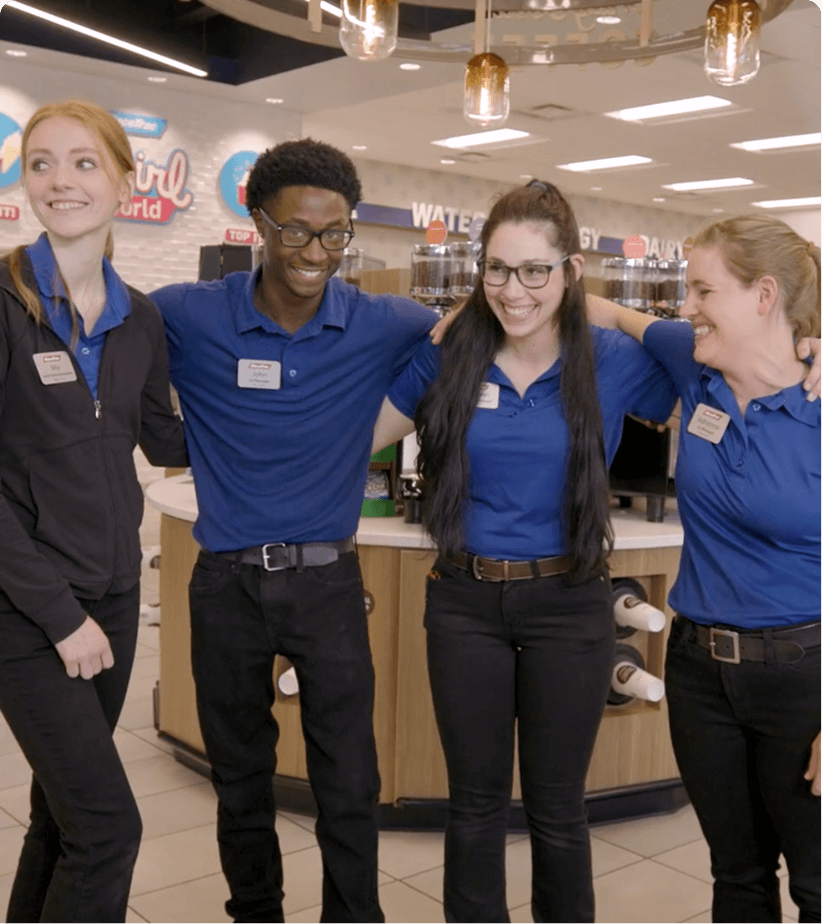 For example, workforce expectations around flexibility, career mobility, personalization and purpose are evolving. Grubbs noted discipline and clarity are required to successfully meet these new expectations. Economic pressure is also real, she commented, as HR leaders are asked to differentiate their employment brand and strengthen engagement while managing costs.
Also, from a technology standpoint, HR leaders are tasked with finding opportunity with tools such as data analytics and automation.
“Ultimately, the biggest challenge is that HR must operate proactively,” she revealed.
Grubbs’ approach to HR is shaped by a performance-driven and operationally focused culture.
“We must build people strategies that are practical in a front-line retail setting, developing leaders who can translate strategy into results and maintaining clear standards as we scale,” she said.
Watching these leaders realize the scale of their influence has been one of Grubbs’ defining moments.
“In 2023, we hosted our first-ever general manager summit where 600-plus leaders came together, and we were able to reinforce their role in driving strategy, developing their teams and create a sense of ownership. It’s rewarding to me to see us equip leaders with the right tools and perspective, and that in turn cascades through teams and creates a ripple effect,” she said.