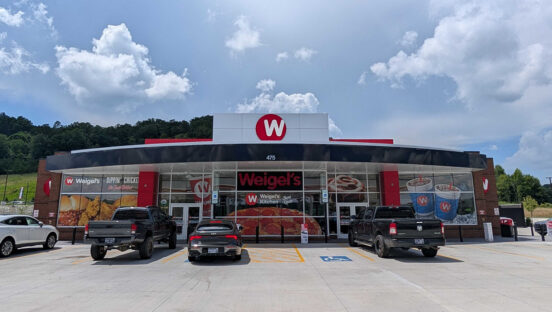
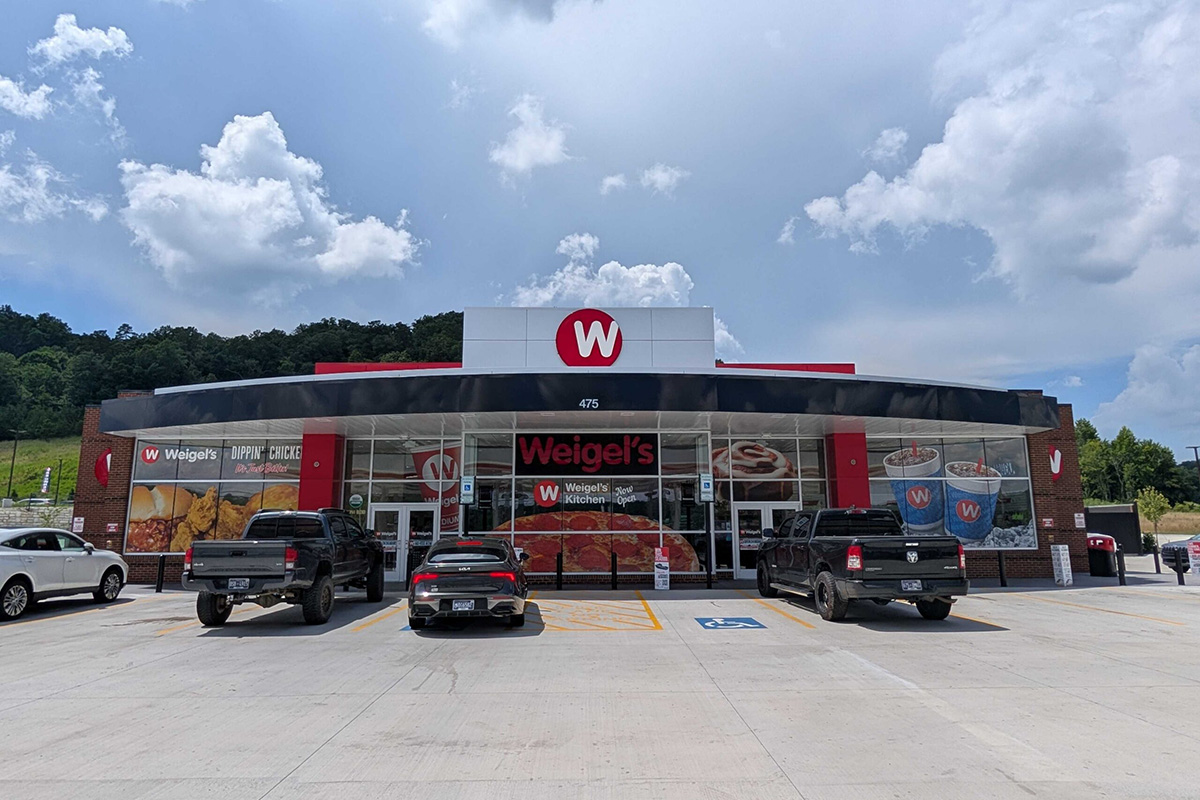

Weigel’s, with 90 stores in east Tennessee, has seen major growth in delivery revenue over the past year. In July, the Knoxville, Tenn.-based chain revealed that it had more than tripled the annualized run rate of its delivery business between December 2025 and July 2026. CStore Decisions caught up with Nick Triantafellou, director of marketing for Weigel’s, to learn more about the chain’s delivery strategy, the trends the chain is monitoring in the space and how Weigel’s has grown its delivery program.
CStore Decisions (CSD): Weigel’s reported in July that it has more than tripled its delivery revenue when measured on an annualized basis between December 2025 and July 2026. To what do you attribute this growth?
Nick Triantafellou (NT): The answer is not a list of things we did but actively making an effort to make sure we met the customer where they wanted to be met. We stopped treating delivery like a small add-on channel and began merchandising and marketing it as another Weigel’s storefront.
The growth really accelerated when we expanded our reach by adding DoorDash in December alongside Uber Eats that launched earlier in 2025. That put Weigel’s in front of more customers on the platforms they were already using. But simply being listed was not enough. We made essentially the entire store available thanks to Vroom, so customers could use delivery for a full convenience trip rather than just a limited selection of food or snacks. We recently split Weigel’s and Weigel’s Kitchen into separate storefronts, which allows us to capture two different customer missions: someone searching for convenience items and someone looking for a meal.
From there, we actively drove awareness both in-store and digitally. We promoted delivery heavily within DoorDash and Uber Eats, while also using our own channels to remind existing Weigel’s customers that delivery was available. Vroom gave us the infrastructure to manage and scale those different storefronts without treating each one as an entirely separate program. So, the growth was not attributable to one promotion or platform. It came from expanding our marketplace presence, broadening the assortment, improving how customers discover us and consistently marketing the service.
That is the real story behind the tripling: We created more opportunities for customers to find Weigel’s, gave them more reasons to order once they found us and treated delivery as a meaningful part of the business.
CSD: Tell me more about how your delivery program works.
NT: We want customers to be able to order from Weigel’s wherever they prefer to shop. They can order directly through our app and website, or they can find us on third-party marketplaces like DoorDash and Uber Eats. Vroom is the technology partner working behind the scenes to connect those channels. It allows us to manage our assortment, pricing, availability and incoming orders through one system instead of building and maintaining a separate program for every platform.
It is also important to us that customers still have a connection to MyWeigel’s Rewards when they order through a marketplace. DoorDash customers can connect their rewards account, earn points on their purchases and continue building toward their next tier. The capabilities are not identical across every channel, but we want to recognize customers and strengthen that relationship wherever the transaction begins.
(Weigel’s makes) essentially the entire store available for delivery instead of limiting customers to a small, predetermined menu. Convenience customers are not always shopping for one type of product. The same order might include dinner, beverages, snacks and household essentials. Providing that breadth of assortment allows customers to build the trip they need in that moment, and that is a tremendous advantage for the convenience store industry. We sit in a unique space between restaurants and traditional grocery stores. A restaurant can deliver dinner, while a grocery store can provide a large household order, but a convenience store can quickly fulfill the collection of needs that often occur together. A customer can order a fresh meal, drinks, snacks, ice, household essentials and something for breakfast the next morning in one transaction.
That is how people actually use convenience stores. They are not always shopping within a single category or planning several days ahead. They are trying to solve an immediate need. Our stores are already located close to the communities we serve, stocked for those immediate occasions and designed to fulfill transactions quickly. Mobile delivery extends that convenience beyond the four walls of the store. It gives the convenience industry an opportunity to own the space between restaurant delivery and a full grocery trip, and I think that is where our industry can provide something neither of those channels delivers quite as well.
CSD: What third party delivery platforms do you partner with today? Why do you find partnering with these third parties to be valuable?
NT: We partner with DoorDash, Uber Eats, Postmates, and we are working toward joining Grubhub as well. For us it is incremental business. This customer didn’t come to our app or our website, and they are currently in an active need state for food or convenience. We want to be in that space meeting the customer and meeting that need state. If we weren’t there, they aren’t ordering from us, and those dollars are going to competition.
CSD: How many stores offer delivery today?
NT: Eighty-six of our 90 stores offer delivery. The four that do not are in areas where we have stores located very close to one another, so leaving those locations out of the program does not limit our reach. We still have full delivery coverage across the markets we serve.
CSD: Are there certain locations where you find delivery works best? Are there certain locations where you find it isn’t as popular? If so, what are you seeing?
NT: What we have found is that offering essentially the entire store allows very different types of locations to succeed in delivery. Our top-performing store is in a fairly rural market. When customers need convenient essentials or a fresh meal, we can bring those items directly to them instead of requiring a trip to the grocery store. Another great delivery site is in a growing Knoxville suburb with a 24-hour factory less than three blocks away. Those are two completely different trade areas, but delivery is extremely popular at both.
For us, the key is not a particular type of location. It is making sure the entire store is available to the customer, executing consistently and delivering the same warm Weigel’s heart that customers have come to expect when they walk into one of our physical stores.
CSD: I love that Weigel’s receives fresh doughnuts from the commissary at 11p.m. because doughnut orders peak between midnight and 1 a.m. Do any other delivery trends like this stand out and, if so, how is Weigel’s responding?
NT: I also love that people know the freshest doughnuts in Knoxville are available late night and are getting them delivered to their front porch from Weigel’s. It shows a powerful story of a vertically integrated commissary, operations and delivery working together.
I think a trend that really stands out to me, from 4 p.m. to midnight we do over 51.7% of our delivery sales — during an eight-hour window. And, 42% of our delivery sales are from 4 p.m. to 10 p.m.; evening is super important for our stores and delivery. Customers are turning to us for dinner, late night snacks, beverages and 21+ items they need for their evening, often within the same order. That is why having essentially the entire store available matters so much to us. We are not trying to predict on specific delivery occasion. We are giving customers the ability to build the trip that fits their needs in that moment.