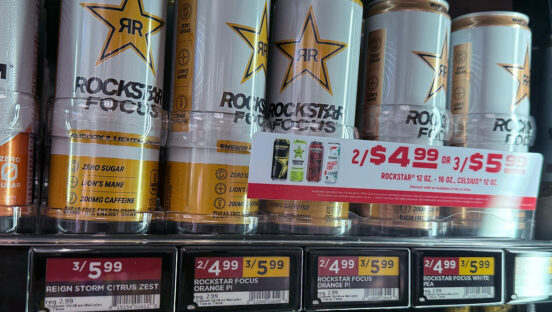
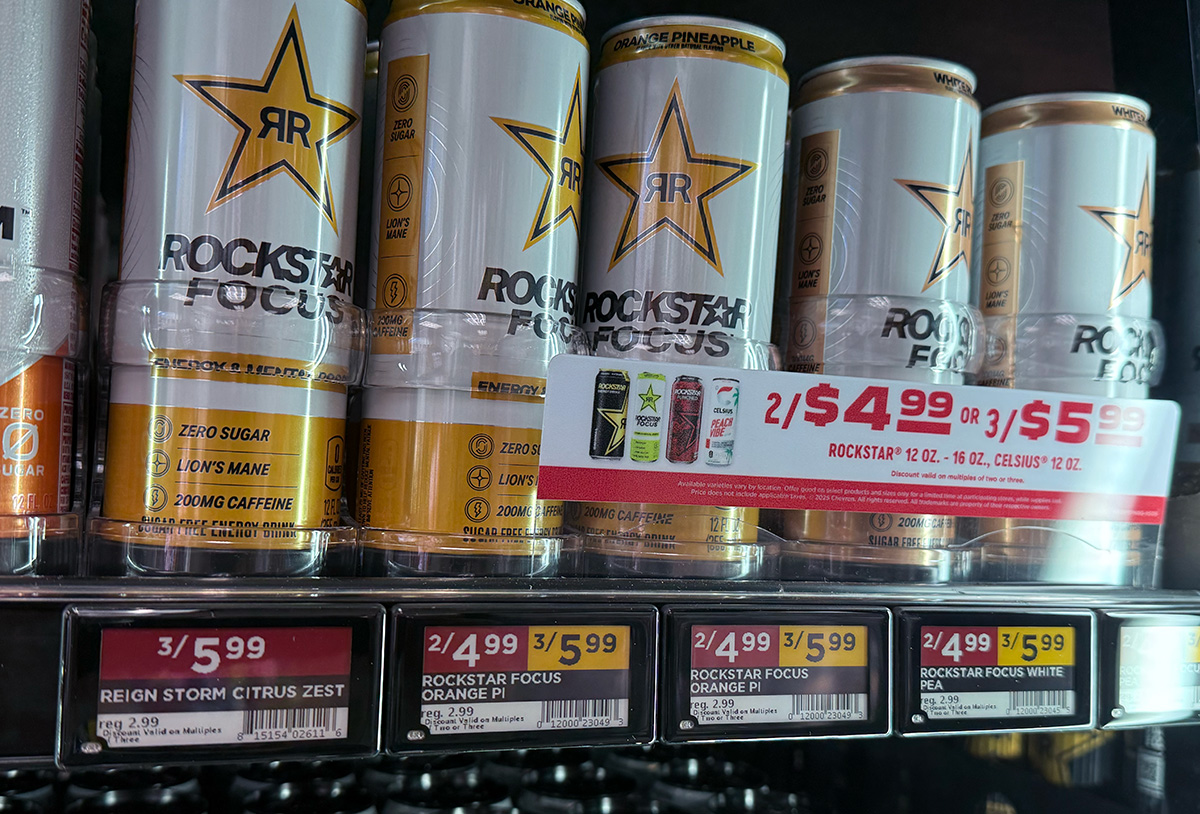
Digital shelf labels are rolling out at retail, and some c-store operators are getting in the game. H&S Energy, which operates 250 locations in California, Oregon and Washington under the Power Market, Extra Mile and Pinnacle 365 banners, launched the technology in its stores, and CStore Decisions reached out to the company’s VP of operations, Fidaa Mohrez, to learn about the process.
CStore Decisions (CSD): What swayed you to switch to digital shelf labels?
Fidaa Mohrez (FM): Several factors drove the decision. The first was the efficiency of our pricebook department. We wanted to make sure prices were accurate and directly linked to our back-office system, leaving no room for the mispricing errors that can occur when tags are printed and placed manually. The second factor was operational efficiency. By eliminating manual pricing work at the store level, we could reallocate that time back to serving customers and improving execution on the floor rather than spending hours managing paper tags.
When we evaluate any major investment, we ask three questions: Does it improve the customer experience? Does it improve operational efficiency? And does it deliver real savings over time? In this case, the answer to all three was yes. Our analysis showed that, even with the upfront investment, the return on investment (ROI) is guaranteed within a few years. Those three factors together led us to move forward.
(CSD): What has the rollout looked like? Were there any challenges?
(FM): We always begin with a proof of concept. It gives us a chance to test everything, learn and prepare for any challenges that might come up at scale. We used that phase to train multiple store managers and operational leaders, and once the proof of concept was successful, we began expanding store by store.
The biggest challenge has actually been logistics more than execution. A project this size cannot be done in one shot; you have to plan it, schedule it, sequence the shipments and decide carefully which store comes next. The other major challenge has been on the software side. Our back-office system is locked and does not natively allow third-party integrations, which created real complications. Fortunately, we partnered with a strong vendor who was able to build a workaround for us.
(CSD): Where have you seen the biggest ROI?
(FM): The biggest ROI has been operational efficiency. The time and effort store employees previously spent on manual tags — printing them, placing them and later auditing to make sure each one was correct and in the right spot — is significant. With inflation and today’s economy, we are updating prices much more frequently than in the past, which makes that work especially stressful when done manually. Removing that burden has driven meaningful labor savings.
We are also saving on materials, including the labels and paper themselves. But we cannot overlook the additional efficiencies the tags create beyond pricing; they support inventory control, ordering, merchandising and stocking. The tags include a range of features that benefit the operation well beyond price display.
(CSD): What should other retailers know before investing?

(FM): Be prepared for a large investment and be patient on your ROI. This is a long-term play, and it is also a risky one. You cannot choose your tags lightly. You need to do your research and your homework. The tags themselves are expensive hardware, and the batteries are expensive as well — so when you select a tag, you need to be confident the batteries will hold up over time. You also need to be sure you are choosing the right technology. This space is evolving quickly, and solutions can become outdated fast, so you don’t want to commit to something that is already near the end of its lifecycle.
Finally, choose the right partner. This is not an easy project to execute. It requires a real commitment of time and resources. We are still learning, and we are not yet at the point where we want to be. But we chose the right partners, and we know we still have work ahead of us.