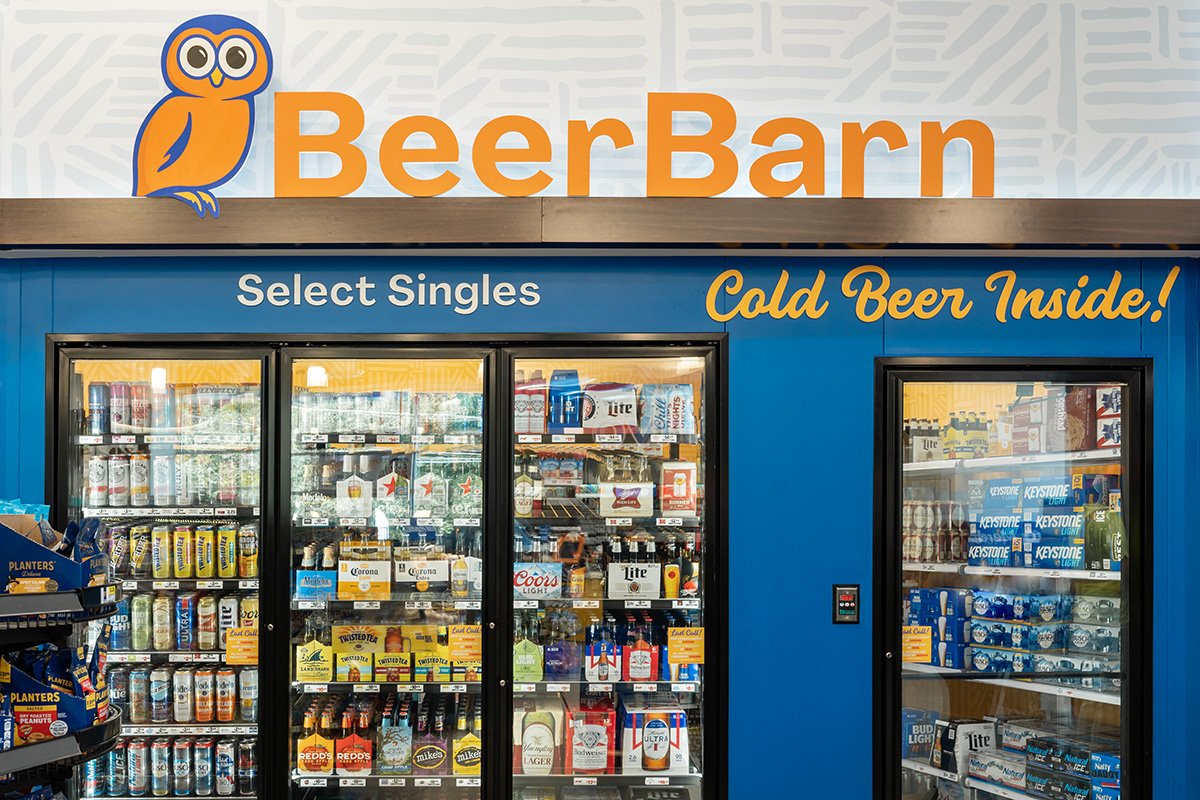
The typical c-store alcohol consumer looks significantly different in 2026 compared to previous years. Historically, retailers could depend on beer sales to drive the majority of alcohol sales. But today, consumers are expecting more segmented, diverse beverage offerings that extend to premium beers, limited-time seltzers and spirits.
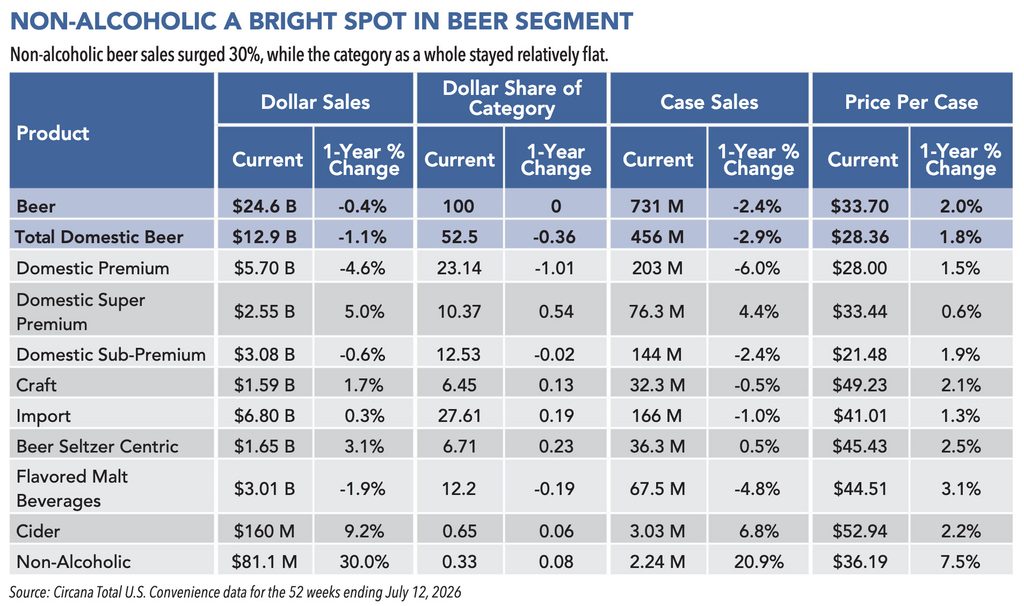
While beer continues to dominate the category as a whole, generating $24.6 billion in dollar sales and 456 million units sold for the 52 weeks ending July 12, according to c-store research firm Circana, new SKUs are steadily gaining market share year over year.
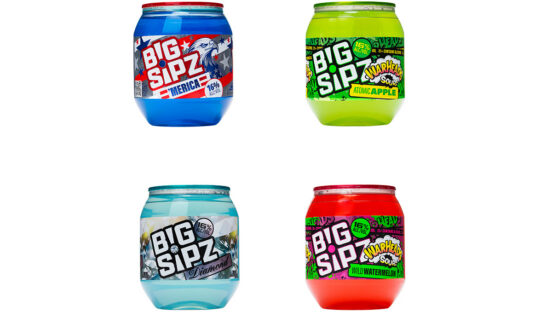
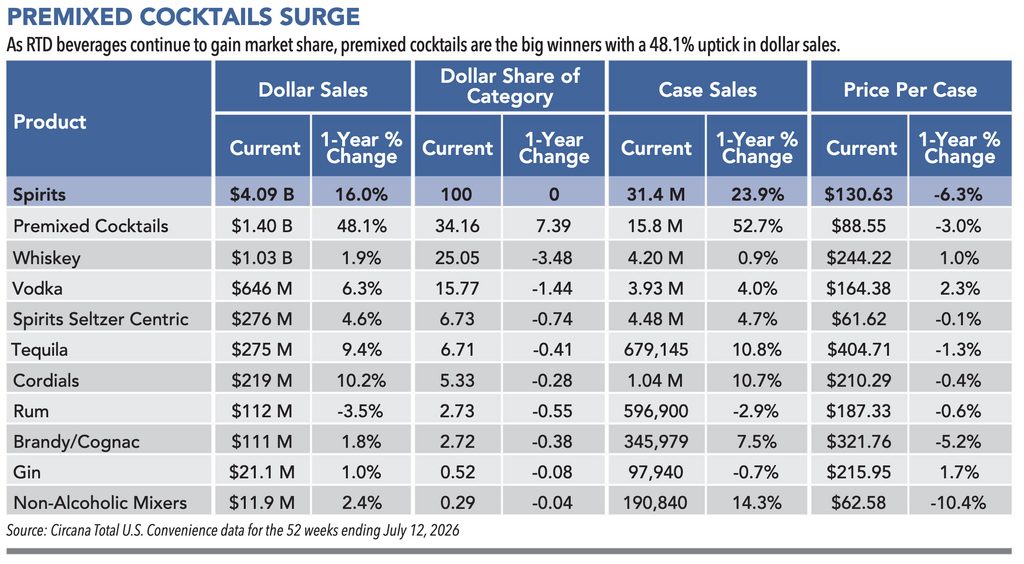
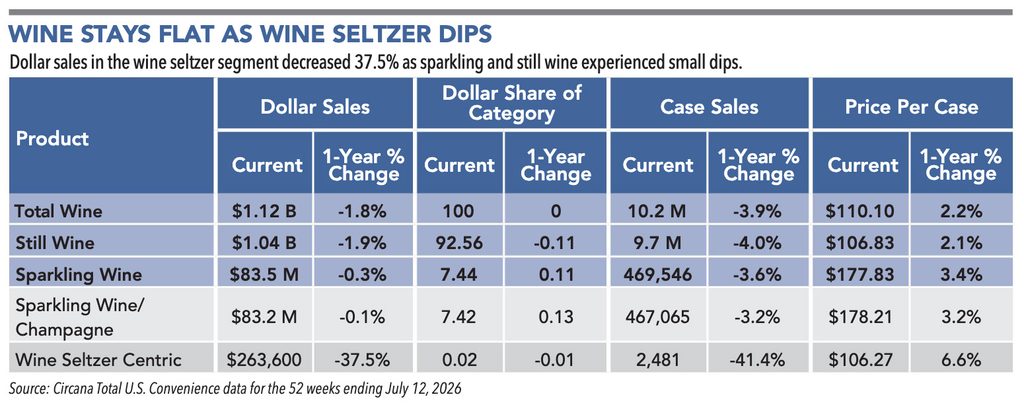
Pre-mixed cocktails, for example — a relatively new segment in the c-store space — saw an uptick of 48.1% in the 52 weeks ending July 12. They accounted for a staggering $1.2 billion in dollar sales for the year, surpassing wine sales, which came in at $1.1 billion.
“The (alcohol) category remains important to convenience retailers, but growth is becoming more segmented than broad-based,” noted Tim Powell, managing principal at Foodservice IP, a c-store consulting firm. “Traditional beer is mature, while premium imports, Mexican beers, flavored malt beverages and RTD cocktails continue to attract attention. Retailers are increasingly managing the category around specific consumption occasions rather than simply expanding assortment.”
Powell mentioned that “value sensitivity, convenience and occasion-based purchasing” are some of the biggest factors influencing the category today.
“Consumers continue to watch discretionary spending, making promotions and package size important,” he said. “At the same time, shoppers want beverages that fit immediate consumption occasions, whether that’s after work, before an event or alongside a prepared meal purchased in-store.”
This shift in consumer behavior has led to more deliberate purchase decisions, with Powell noting that customers are more willing to spend for products they see as premium and unique, while also seeking value.
“There’s also continued interest in portability — single-serve formats and products that require little or no preparation,” he continued. “Shoppers increasingly expect retailers to make decisions easy through curated assortments rather than overwhelming choice.”
This shift toward quick, convenient and flavor-forward alcohol offerings has set the RTD segment up for continued success in 2026 and beyond.
“RTDs combine convenience with consistency,” said Powell. “Consumers can enjoy a cocktail-style experience without buying multiple ingredients or investing time in preparation. They also align well with convenience stores’ core strength (which is) providing quick solutions for immediate consumption. As product quality improves and flavor innovation continues, RTDs appeal to consumers who want variety beyond traditional beer.”
From ‘Nice to Have’ to ‘Must Have’
Retailers are also noticing the RTD surge, with John Parduski, director of merchandising for Onvo, which operates more than 40 locations in Pennsylvania and New York, noting that the current state of the segment is reminiscent of the 2019 seltzer boom.
“We have expanded both styles of RTDs (liquor and malt) in all of our locations,” said Parduski. “The popularity and demand for these products required us to look at these items as a new category. In the past, they were a ‘nice to have’ in our locations, but they are now a ‘must have’ in every store. Managing the space allocated to these products brings new challenges we have not seen since 2019, when seltzers exploded in the market. RTDs have earned their way into the conversation when deciding what to place in your planograms.”
Following broader industry trends, Parduski noted that customers are often seeking out smaller pack sizes for these products, such as singles and 6-packs. Malt-based RTDs are also driving sales at Onvo.
“The other sub-department that is seeing strong growth is malt-based RTDs,” he said. “We created an entire planogram just for these items due to the growth we began seeing toward the end of 2025. When we introduced liquor-based RTDs, we weren’t sure if it was going to cannibalize our beer and wine sales. We quickly learned that wasn’t the case, and we continue to see growth in both segments.”
Allocating Cooler Space
To determine which RTD products deserve shelf or cold vault space, Parduski and Onvo work with the Pennsylvania Liquor Control Board (PLCB) to review purchases being made by other retailers, spot trends and see what customers are purchasing from competitors.
“Once we determine a product line to bring in, they are introduced typically to the shelf, and we review sales data and determine if cold vault space is warranted,” Parduski continued. “Currently we are basing it off of sales by location because no two stores are alike. We are looking at each store on its own and listening to what our customers are telling us based on their purchases.”
This strategy of customizing your beverage selection based on your community’s preferences on a store-by-store basis, according to Foodservice IP’s Powell, is exactly what retailers will need to do more of in the future.
“Rather than simply adding new products, retailers should continuously evaluate productivity by SKU and by occasion,” said Powell. “Space should increasingly reflect local shopper demand and purchasing occasions.
He added that successful retailers will balance proven core brands with emerging segments but will avoid adding too much assortment as that can lead to shopper confusion.
Alcohol Expectations
Looking ahead, according to Powell, the alcohol category is set to be defined by premiumization, more occasion-based merchandising and “continued growth in products that blur traditional category lines.”
Parduski expects craft and specialty beers to drive sales growth in the coming months, noting that this could be an underappreciated trend that retailers can capitalize on.
“While mainstream beer has its rightful place in all planograms, craft and specialty beers are a category that needs to be fine-tuned,” he said. “These items are often sold in singles or 6-packs. Three shelves can hold approximately 15 different 6-pack varieties. We transitioned those shelves to singles, and now we can carry 30 varieties of craft and specialty beers. This gives our customers wider selection without losing space for the must-have items.”
Powell also expects retailers to become more data-driven as they manage their alcoholic beverage assortment at the store level and move away from a one-size approach across the chain.
Powell also believes that foodservice will be a key growth driver for alcohol sales, giving retailers an opportunity to merchandise adult beverages alongside meal occasions.
“From my perspective, it’s helpful to view adult beverages as part of the broader immediate-consumption mission,” Powell said. “Convenience retailers are increasingly competing for meal occasions and food-away-from-home spending. … The operators that succeed will be those that merchandise beverages as part of a complete eating and drinking occasion, making it easier for consumers to purchase everything they need in one stop.”