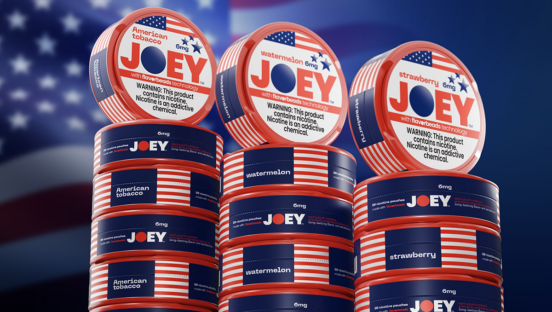

Over the past several years, a transformation has been taking place in the c-store backbar. While cigarettes, a long-time category staple, have experienced gradual volume declines, other nicotine segments have expanded to meet changing consumer preferences. Vape products have captured significant share in recent years, and in 2026, the continued growth of modern smokeless tobacco products is reshaping the category once again, creating new opportunities across the backbar.
This shift in purchasing behavior can be attributed to numerous factors, but overall, consumers are leaning into “less risky products” and “poly-use,” or the use of several different types of tobacco products, according to National Association of Tobacco Outlets (NATO) Executive Director David Spross. This has opened the door for new, non-traditional tobacco offerings like spitless pouches.
Tobacco Trends
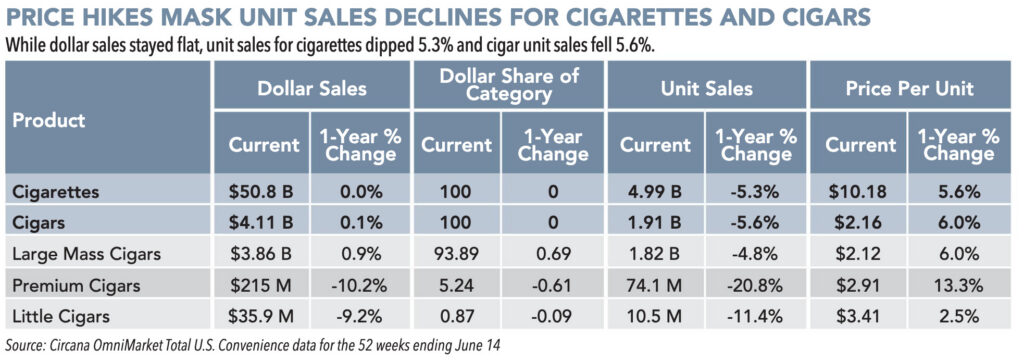
Despite these shifts, cigarettes still remain the most purchased tobacco product throughout the country, notching over $50 billion in dollar sales in the c-store channel over 52 weeks ending June 14, according to Chicago-based research firm Circana. Unit sales, however, dipped 5.3%, signaling consumers’ growing preference for alternatives.
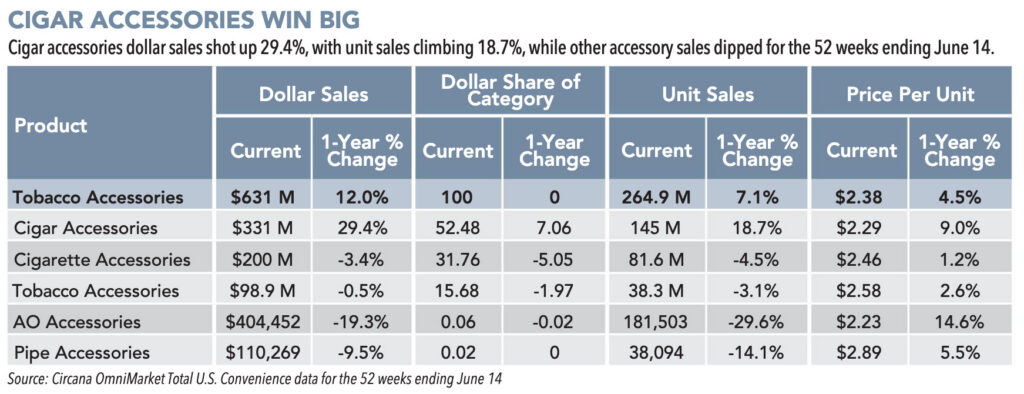
Tobacco accessories are a bright spot in the space, with dollar sales ticking up 12% and unit sales climbing to 7.1%.
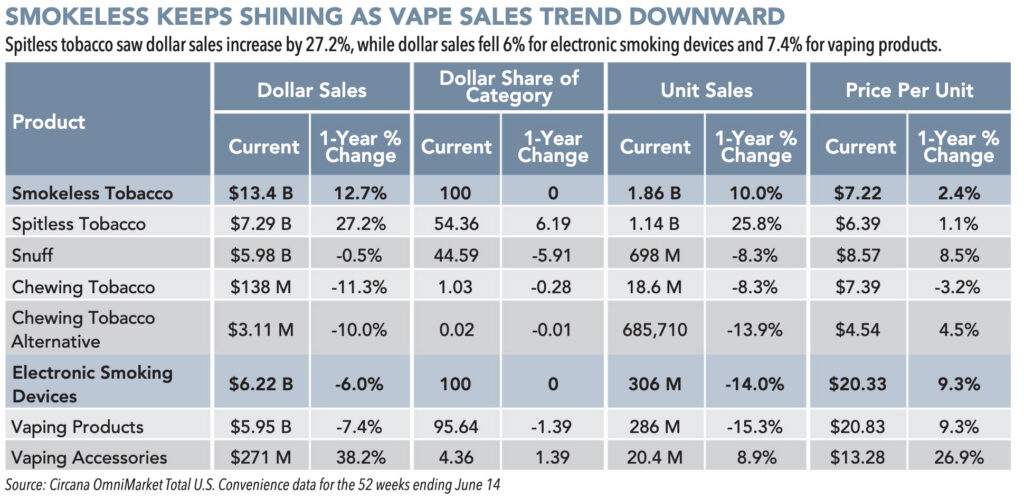
Still, the segment retailers should be keeping a close eye on is smokeless, and spitless tobacco specifically, as dollar sales shot up by 12.7% and unit sales by 10% — a trend that has continued for several years now.
As consumers shift to smokeless offerings, vape sales are slowing. While still accounting for over $6 billion in dollar sales, the segment saw declines of 6% and 14% in dollar sales and unit sales, respectively for the period.
And c-store retailers are feeling the pressure.
“Performance has become more challenging this year for certain with contributing factors such as economic pressures and tobacco promotion strategy changes,” said Jessica Starnes, director of loyalty and tobacco category manager for Knoxville, Tenn.-based Weigel’s, which operates over 90 stores across east Tennessee. “Cigarettes remain the No. 1 driver in overall sales, however (they are) still in a decline over the prior year. The most outstanding performer is the nicotine pouch segment.”
At Beaverton, Ore.-based Plaid Pantry, director of marketing Jon Manuyag said that as of May 2026, cigarette dollar sales and unit sales are down 2% and 8%, respectively, with moist chew also seeing downticks of 7% and 12%.
The difference maker in-stores, he said, is modern oral nicotine.
“Modern oral nicotine pouches continue to be the category offsetting those major declines,” said Manuyag. “Modern oral nicotine pouch trends are +29% in dollars and +17% in units. (There is) more innovation coming out of the big manufactures like ZYN and ON to drive a larger mix within their portfolio.”
Manuyag added that modern oral nicotine “continues to drive strong growth year over year,” and is “posting continued high double-digit increases in both dollars and units.”
Price-Conscious Consumers
Economic factors play a massive role in tobacco product purchasing behavior. In 2026, consumers’ wallets are tightening as inflation continues to drive prices up industry-wide.
As a result, many consumers are shifting to lower-tier cigarettes to offset inflationary effects.
“Consumers are price conscious, especially when gas prices rise, which results in downtrading to less expensive products,” said NATO’s Spross.
At Weigel’s, Starnes is seeing a similar “downtrading” trend, noting that fourth-tier cigarette and nicotine pouch offerings are some of the “largest growth opportunities” in their stores.
“I believe, in the next five years, we will still have cigarettes on the backbar, (we will) possibly (add) heat-not-burn items, a continued expansion of nicotine pouches and hopefully a regulated vapor space,” she said.
Looming Regulation
As retailers try to make sense of the modern tobacco customer, regulation remains top of mind. The Food and Drug Administration (FDA) is reportedly finally making its way through a sea of pre-market tobacco product applications (PMTAs) in an effort to provide more clarity for c-store operators.
When it comes to regulation, Starnes mentioned that “the lack of regulation in the vapor category has been the most impactful. It is tough to compete in a category when your neighbor is not playing by the same rules.”
Plaid Pantry’s Manuyag, too, is looking for additional clarity from the FDA.
“Flavor bans continue to be the major watchful headwind to our business as we navigate both county and state legislation around the ban of flavored menthol or flavored tobacco and nicotine products,” he said.
Spross expects FDA action to become more prevalent in the coming months.
“I am expecting more PMTA authorizations particularly in the vapor and nicotine pouch space,” he said. “Already this year, the first flavored vapor products were authorized by the FDA and late last year, the FDA authorized pouch products as part of the FDA’s pilot program that increases efficiency and streamlines the review process for PMTAs for nicotine pouch products.”
To prepare for upcoming developments, Spross recommended retailers become familiar with a recently proposed rule by the FDA regarding “Establishment Registration and Product Listing for Tobacco Products,” which would extend registration and listing requirements to foreign establishments that engage in the “manufacture, preparation, compounding or processing” of a tobacco product, he said.
“Under the proposed rule, registration and listing would be required from foreign manufacturers before the product is imported into the U.S. and extend FDA’s inspection authority to registered foreign establishments,” he continued. “Previously, FDA could inspect foreign establishments only in the context of PMTAs reviews.”
The positive trend Spross is seeing from the FDA is that the agency plans to increase transparency for retailers.
“(The FDA) issued enforcement guidance in May which stated that the FDA generally does not intend to prioritize enforcement on new products such as vapor and nicotine pouches that are awaiting a decision on their PMTA applications,” he said. “Specifically, this guidance applies if a product is subject to an application that is pending, and the application has been accepted by the FDA and is pending for more than 180 days. The FDA also intends to create and maintain a webpage identifying manufacturers and their associated products that FDA generally does not intend to prioritize enforcement.”
While many questions still remain unanswered, it is likely that retailers will soon have a better understanding of the tobacco landscape in the coming months.