
Convenience store foodservice is evolving at an unprecedented rate, growing to a point where many c-store chains rival popular quick-service restaurants (QSRs) when it comes to food quality, quantity and, crucially, speed.
The evolution of the c-store foodservice category has come at a perfect time, as consumers across the country are increasingly looking for value while economic factors drive prices up across all industries. Put simply, customers are feeling the pressures of inflation.
As a result, c-store visitation demographics have shifted in recent years.
In Datassential’s recent “C-Store Quarterly Tracker,” the intelligence platform dove into the nuances of c-store foodservice using monthly survey data. The study explored a range of macro factors including consumer financial health, spending confidence, price sensitivity and strategies for saving.
The data in the the report was gathered through Datassential’s Omnibus in December 2025 with 1,516 “gen pop” U.S. consumers and 464 foodservice decision makers, 17 of whom operate convenience stores.
Dining In
According to Datassential, 22% of respondents visited a c-store in-person for a meal away from home at least once in December 2025. Of those consumers, millennials drove the most traffic at 28% of respondents.
Following closely behind was Gen Z at 25%, Gen X at 21% and Baby Boomers at 15%.
Regionally, the majority of customers came from the Northeast (24%), followed by the West (23%), and then the Midwest and South (22%).
Of the respondents, 24% identified as low income, 22% as high income and 21% as medium income.
Delivery
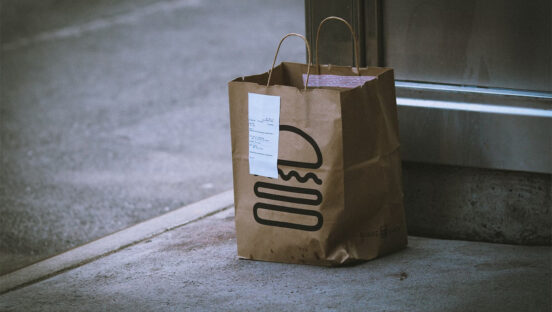
On the delivery front, c-store retailers are seeing significant success, led mainly by Gen Z and followed closely behind by Millennials.
According to the report, 10% of consumers had food delivered from a convenience store at least once in December 2025.
Gen Z made up 17% of responses, with Millennials coming in at 16%. Gen X and Baby Boomers have been much slower to adopt the technology, notching responses of 8% for Gen X and just 1% for Baby Boomers.
On a regional basis, delivery transactions are spread evenly throughout the U.S. across the Northeast (11%), Midwest (11%), South (10%) and West (11%).
The majority of delivery customers identified as medium income (13%), with low income and high income respondents each coming in at 9%.
Download the full Datassential report here.
"*" indicates required fields
By clicking 'Submit' above and registering for this content, I acknowledge and agree to WTWH Media's Terms and Conditions and to WTWH Media's use of my contact information to communicate with me about offerings by WTWH Media, its brands, affiliates and/or third-party partners, consistent with WTWH Media's Privacy Policy. In addition, I understand that my personal information may be shared with any sponsor(s) of the content, and that they may contact me directly about their products or services. Please refer to the privacy policies of such sponsor(s) for more details on how your information will be used by them.