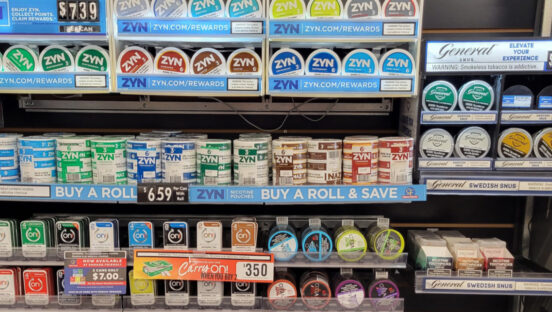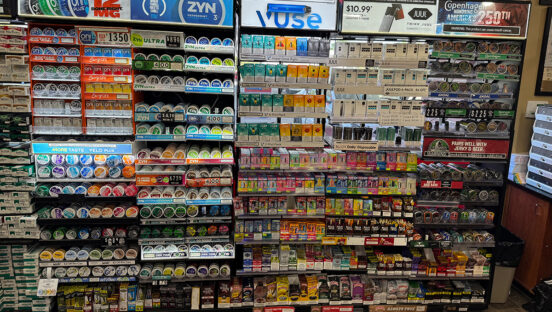
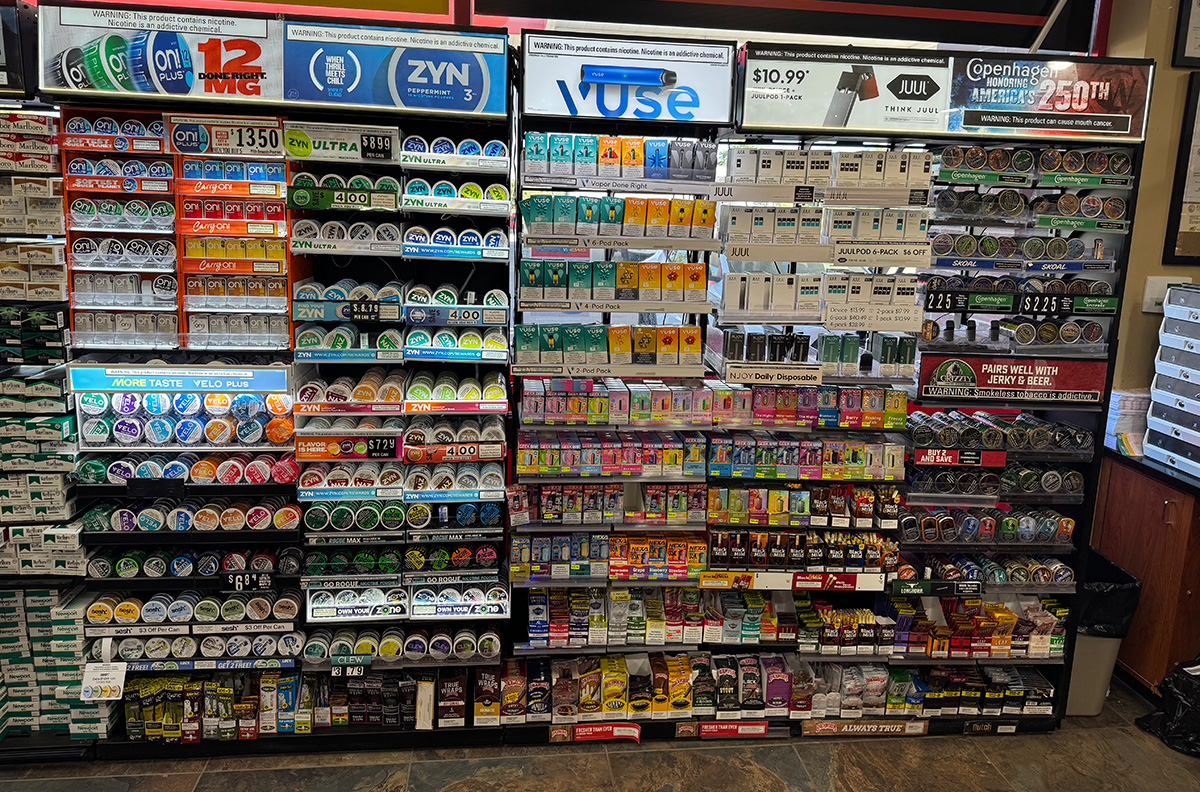
Vape and smokeless continue to capture backbar market share. While retailers face ongoing vape regulations, modern oral nicotine sales are surging, continuing a multiyear growth trend.
Vape: Maneuvering Around Compliance
Vape customers want flavors, a consumer demand upon which many c-store retailers are unable to act as more states and municipalities ban non-tobacco flavors. And many that are not enacting a specific flavor ban are instead launching product directories, allowing only products on these lists to be sold, which generally require authorization from the Food and Drug Administration (FDA).
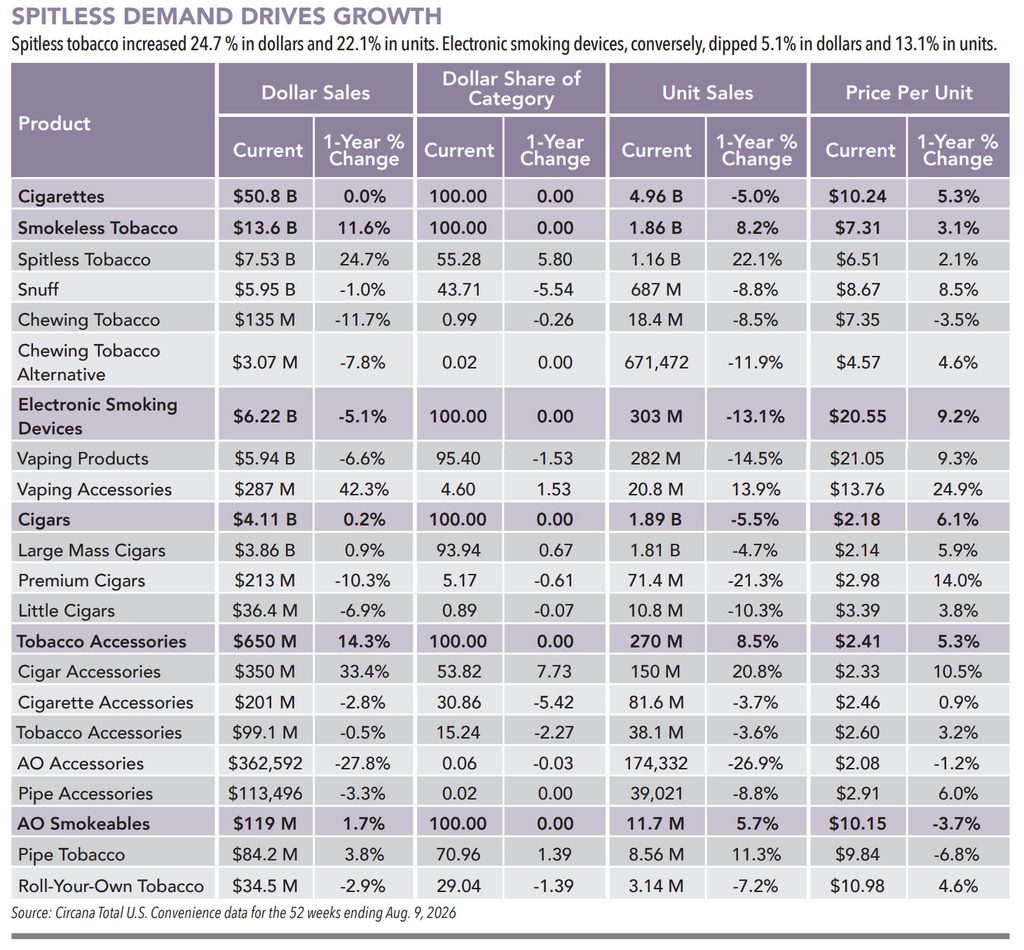
Despite these restrictions, vape is still a $6.22 billion category at c-stores, according to market research firm Circana, even if sales are slowing.
Dollar sales of electronic smoking devices at c-stores are down 5.1% for the 52 weeks ending Aug. 9, according to Circana, and units are down 13.1%. A 9.2% increase in price per unit tempers the decline.
Retailers contending with flavor regulations at the state and local levels are shifting planograms for stores in affected markets, sometimes dramatically in the past years depending on location. They’re staying nimble while continuously monitoring the approval status of vape products.
The category is keeping retailers on their toes, especially if they operate in multiple states.
Luckily for 40-store chain Robinson Oil Corp dba Rotten Robbie, its footprint spans just one state. However, as that state is California, which is known for its strict regulations, the chain is heavily constrained in its tobacco set.
In 2022, California banned the retail sale of most flavored tobacco products, including e-cigarettes. In 2025, the state created an Unflavored Tobacco List naming the unflavored products legal for sale in the state.
Most recently, a bill that would prohibit the importing or manufacturing for sale in California of a disposable vapor product beginning Jan. 1, 2027, and the sale, distribution or offering of a disposable vapor product in the state beginning Jan. 1, 2028, passed the Senate and House.
Despite this and a slight dip in units, vape sales are up at Rotten Robbie. Customers are switching to six-packs, noted Reilly Musser, VP of marketing and merchandising for the chain.
As it updates its merchandising, the retailer recently moved to two-foot sections per category on its backbar.
“That way we could take advantage of as many contractual dollars that we could. We also have tried to replicate the same backbar set across the chain as much as we could. It’s helped a lot; the re-merch process is more efficient when we add new products or we re-merchandise for contracts,” said Musser.
Gas N Wash is also a single-state operator. With 38 locations in Illinois, it’s paying the most attention to premarket tobacco product applications.
“The gap between what’s authorized and what’s actually sitting on backbars is the defining issue in this category,” said Aman Sahi, director of retail strategies for the chain.
This has caused challenges around planning, as it can be difficult to commit shelf space to a product “when its legal status can change on a legislative calendar you don’t control,” he continued.
Illinois municipalities Chicago and Evanston have enacted flavor bans, further complicating c-store tobacco business in the state.
As it is, vape sales are declining at the chain, and it’s seeing trade-down behavior and value brands starting to emerge.
“Watch units, not just dollars,” Sahi advised. “Price increases and manufacturer funding can carry a category’s sales line for a while and mask real volume erosion underneath.”
At InConvenience Inc., which operates 29 stores in Iowa, Missouri, Arkansas and Texas, leadership needs to monitor multiple states’ vape regulations.
“For us, the biggest change has been the gap between consumer demand for flavored disposable vapes and our requirement for 100% regulatory compliance. With the FDA cracking down and state vape registries coming online, we cannot carry many of the top grey-market disposable brands that independent smoke shops would sell,” said Stephanie Hutton, category manager, InConvenience Inc.
In addition to local flavor restrictions and state registries, in Iowa, a tax on vapor products of five cents per milliliter and a tax on nicotine pouches of five cents per can will be established on Jan. 1, 2027.
Still, when local ordinances restrict high-margin flavored vapes, the chain pivots and strengthens authorized vape SKUs, such as Vuse and NJOY.
Smokeless: Keeping Pace
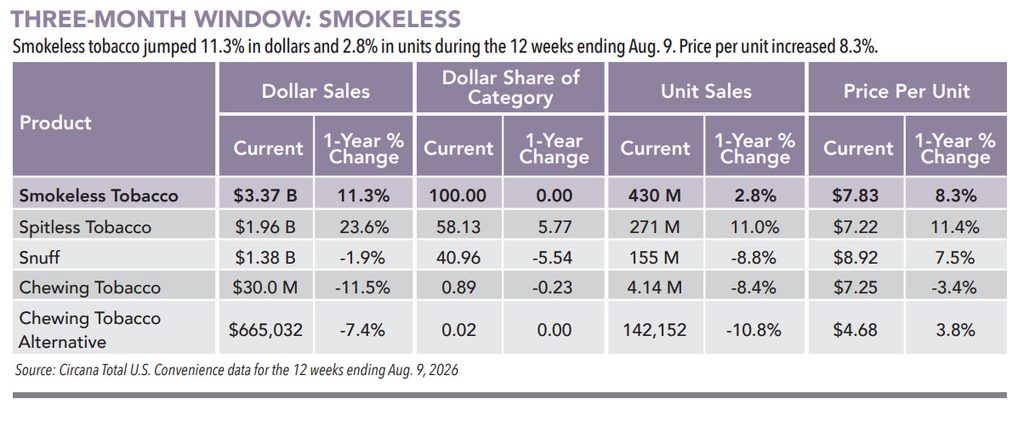
In contrast to vape, the smokeless segment was up 11.6% in dollar sales over the last year, per Circana, and 8.2% in units, driven, as has been the case for some time now, by spitless products.
Rotten Robbie has seen a shift in smokeless consumers from chew to nicotine pouches. Here, too, though, the chain is restricted at the state level — “no flavors, no menthol in any tobacco/nicotine pouch product,” said Musser.
Younger adult nicotine users are moving to pouches at Gas n Wash, with variety — such as multiple brands and flavors — driving demand.
“Nicotine pouches have become a true growth engine for our business,” Sahi said.
Older consumers, however, remain brand loyal.
To drive sales, Gas n Wash is increasing space in the categories driving growth and staying disciplined about carrying the “right brands and the right SKUs within them,” said Sahi. The chain has also been updating stores with older fixtures to improve visibility.
At InConvenience, modern oral has taken market space from cigarettes.
“(Cigarettes are) on the decline, and we have seen consumers switch over to products such as On!, Velo and ZYN. Allocating space to high-growth categories is essential,” said Hutton.
InConvenience evaluates its product selection based on profitability, regulatory safety, customer demand and brand reliability.
“One recent example for us is the introduction of higher-milligram nicotine pouches. We looked at consumer feedback and customer demand and decided to bring a small selection to the backbar. Since we have introduced these, we have seen a 1% increase in sales over the last month,” Hutton said.
Over the course of the next year, Hutton expects optimizing and managing the modern oral nicotine space to the biggest challenge.
“There is a high demand in our stores for nicotine pouches with higher milligrams and different flavor variations. Reporting shows that customers are steering away from the basic mint/menthol flavor and are wanting a more fruit-infused flavor profile. With that in mind, I am having the tobacco reps reset our backbars across the chain to accommodate those consumer demands,” she added.
The chain’s human resources (HR) team has also been working to educate employees on the nicotine variations it carries. To that end, InConvenience has been creating resources to send to its teams.
“As tobacco trends change, we want our employees to be knowledgeable about the products our customers are wanting. To do that, we need to provide ongoing coaching and training so they can have a better understanding of how tobacco trends are evolving, ensuring we are giving the best customer service,” said Cailyn Hanson, HR and payroll administrator, InConvenience Inc.
Rotten Robbie, too, values employee understanding of tobacco products.
“Our managers are great with inventory and customers’ tobacco needs; day to day, they are the ones on the front-line growing sales,” praised Musser.
As convenience retailers manage their backbars, Musser recommended having a good pricebook team and keeping a good spreadsheet of the local rules and regulations. She advised reaching out to local regulators if there are any areas of confusion so everyone is on the same page.
“Compliance has to be built into your daily routine. Know the rules that apply to every one of your locations, because they vary by state, county and municipality, and train your teams on them consistently,” Sahi added.
He noted that at the end of the day, the biggest opportunity isn’t a single segment; rather, it’s how quickly you can identify an emerging brand, get it in the door and give it the right SKUs and space before competitors do.