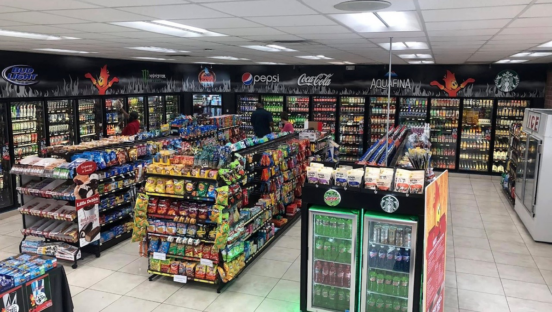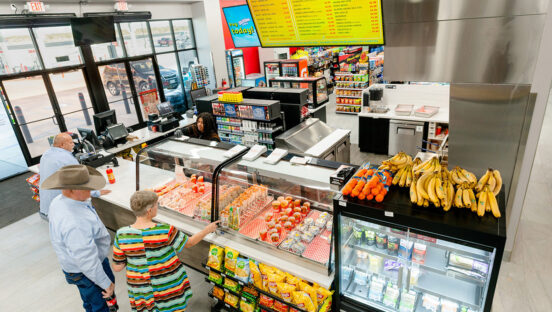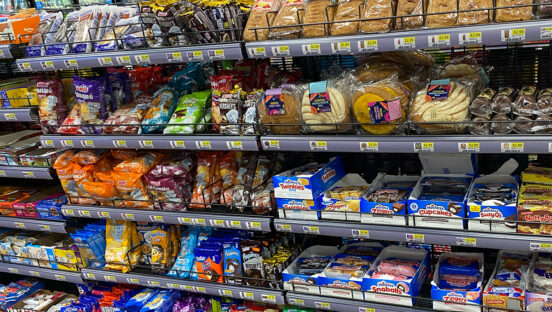

When it comes to inventory management, Reid Petroleum’s Crosby’s, which operates more than 88 c-stores in New York and Pennsylvania, cited vendor reliability as one of its most persistent challenges.
“We have specific vendors, including some tobacco manufacturers, with items that have been on backorder for multiple weeks. In a convenience store format, tobacco is a traffic-driving category,” said Rob Augustine, director of sales and merchandising for Crosby’s Stores, adding that being chronically out of stock on a top SKU puts c-stores at risk of losing customers.
“By tracking backorders week over week and flagging items that cross our expected time threshold, we can get into conversations with vendors and with our own ordering team before the problem compounds,” he said.
Crosby’s also evaluates whether category-level substitutions exist to fill holes.
“On the regulatory side, we’re actively preparing for the U.S. Department of Agriculture Food and Nutrition Service Supplemental Nutrition Assistance Program stocking requirement changes effective November 2026. The new rules increase the required number of distinct varieties across staple food categories, and dairy is the most challenging area for small-format stores. That’s requiring us to revisit our assortment strategy in a category where space is already limited,” Augustine said.
While Crosby’s isn’t operating with full real-time inventory at the item level across all stores it has built “as close to near-real-time visibility as our systems allow, particularly for high-priority categories,” Augustine said. Today, managers have accurate and current data they can use to make better ordering decisions.
“That alone reduces both over-ordering and under-ordering,” he said.
“Visibility that used to take weeks of manual compilation is now available at the start of each period review cycle,” he added.
Meanwhile at Vintners Distributors, which operates 157 Loop Neighborhood Market and Poppy Markets locations in California, real-time inventory management capabilities have been a huge asset and is built into the handheld devices store managers use, helping them to better place orders and complete spot checks. When an item is scanned to be ordered or inventoried, it displays the current inventory, and if that same product count is not available on the shelf it raises red flags, said Matthew Makarem, director of loss prevention & employee development for Loop Neighborhood Market.
Daily scheduled counts, pre-audit visits by an audit team to prep stores, well-educated staff, the security operations center monitoring and acting on issues are just some of the things that have had a big impact on inventory management success at Loop. So too has using state-of-the-art surveillance monitoring software with intelligence leads and ongoing counts and recounts for stores that fail at over a certain percentage, Makarem said.
Augustine credits automating Crosby’s Bad Merchandise Focus Reporting for delivering the most concentrated return on investment.
Makarem noted that most retailers make the mistake of managing their inventory based on gut feelings rather than actual data. “Most retailers do not invest in software or hardware that we have invested in,” he said.
Assuming shrink is just part of the business instead of trying to control it leave money on the table, he cautioned.
“Retailers, in my opinion, generally overlook the four main areas of shrink: external theft, which is 60-70% controllable; internal theft, which is 80% controllable; administrative & operational errors; which is 100% controllable and vendor fraud, which is 100% controllable, while concentrating on ‘controlling the controllables,’” Makarem said.
Augustine sees retailers make mistakes in three specific areas.
“First, over-assortment. Retailers, especially in convenience, add SKUs more easily than they cut them,” he said. Another mistake is treating “bad merchandising dollars as a cost rather than a signal.”
“High waste on a specific item or in a specific store is diagnostic information,” he added.
And finally, vendor passivity.
“Backorders happen, but retailers who don’t systematically track them by vendor, by week and by item are not maximizing their efforts. When a single vendor is responsible for a disproportionate share of your out-of-stocks, that’s a vendor relationship conversation, but you can only have it if you have the data to back it up,” Augustine advised.